


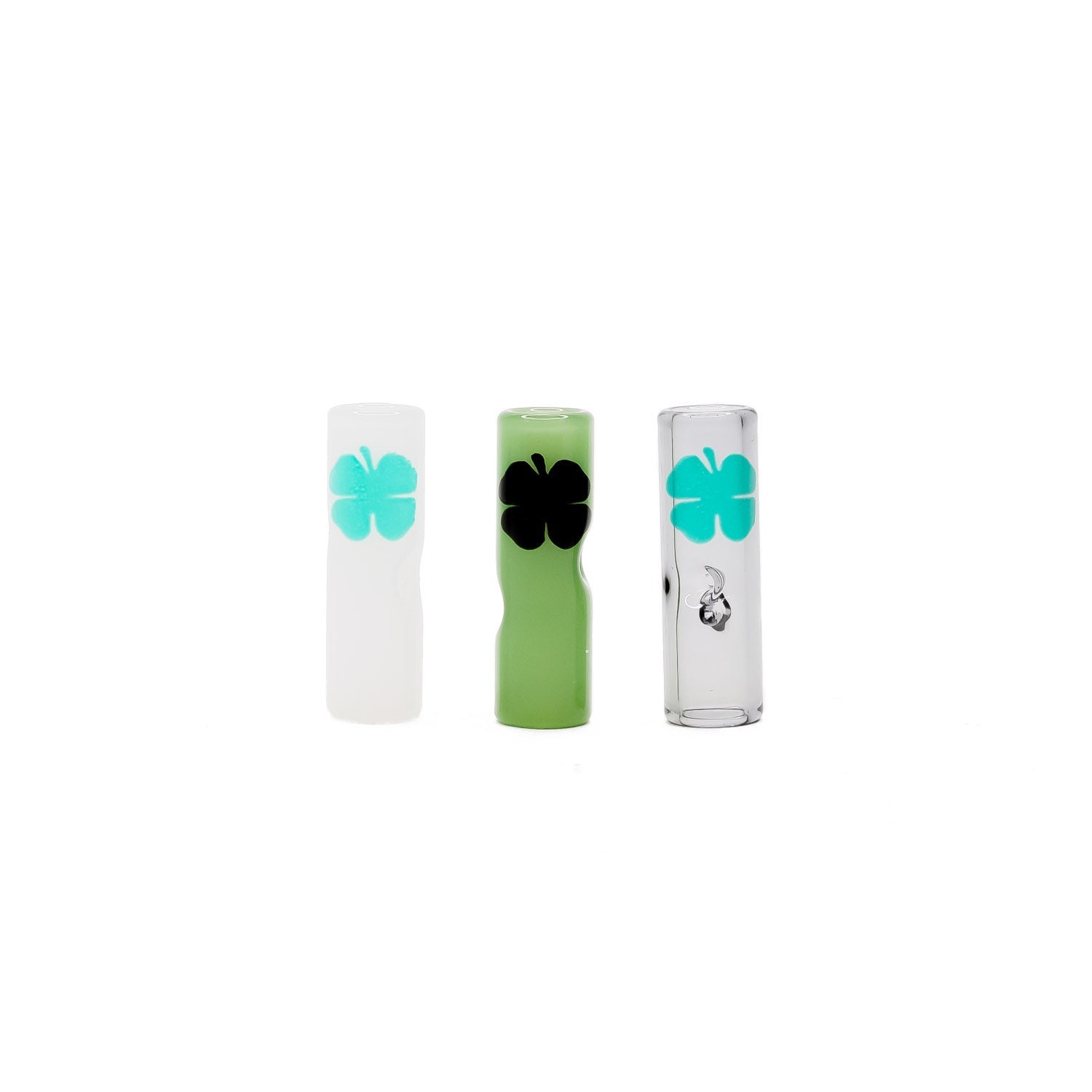
A glass filter tip is a small, reusable glass tube that you roll into the mouth end of a joint in place of a paper crutch. It holds the paper open, keeps loose flower out of your mouth and gives you a firm, taste-neutral mouthpiece down to the last puff. Pick the diameter that matches your usual roll (8 mm for slim, 10 mm for standard, 12 mm for fat rolls and blunts), wrap the paper snugly and rinse the tip after each session. Our Lucky Farms glass tips are ready to order and can arrive the same day across Canada.
This guide covers what the tips do, how to size one, how to roll with it step by step, how to clean it and how it compares with a paper filter.
TL;DR
- Glass tips (also called glass joint tips or joint filter tips) are reusable tubes that replace the paper crutch at the mouthpiece end.
- Match diameter to your roll: 8 mm for slim rolls, 10 mm for standard king-size papers, 12 mm for fat joints, cones and blunts.
- Roll the paper a little tighter than usual around the glass and keep the tip flush with the paper edge.
- Rinse after each use and give it an occasional alcohol soak, and a tip can last for years.
- If you smoke, Health Canada recommends glass over plastic for anything you inhale through, and notes that smoking is the most harmful way to consume cannabis.
Table of Contents
- What a glass filter tip is
- What glass tips do for your joint
- Glass tips vs. paper filter tips
- How to choose the right size
- How to roll a joint with a glass tip
- Cleaning and caring for a glass tip
- Using glass tips with health in mind
- Our perspective on glass tips
- Get your glass tip delivered
- Choosing a tip that fits how you smoke
- FAQ
- Sources
What a glass filter tip is
A glass tip is a short, hollow cylinder, usually made of borosilicate glass, the same heat-resistant type used in lab glassware and many pipes. You slide it into the open end of the rolling paper before you seal the joint. The paper grips the glass, and you smoke through the tube instead of through a folded piece of card.
The same thing goes by several names. Shoppers type “glass joint tips”, “joint filter tips” or “glass tips for blunts”, and they all describe the same small tube. Some are plain cylinders, some have a flared or flat end, and some have a slit or a ball inside. The idea is the same: a durable, non-burning mouthpiece you keep and reuse.
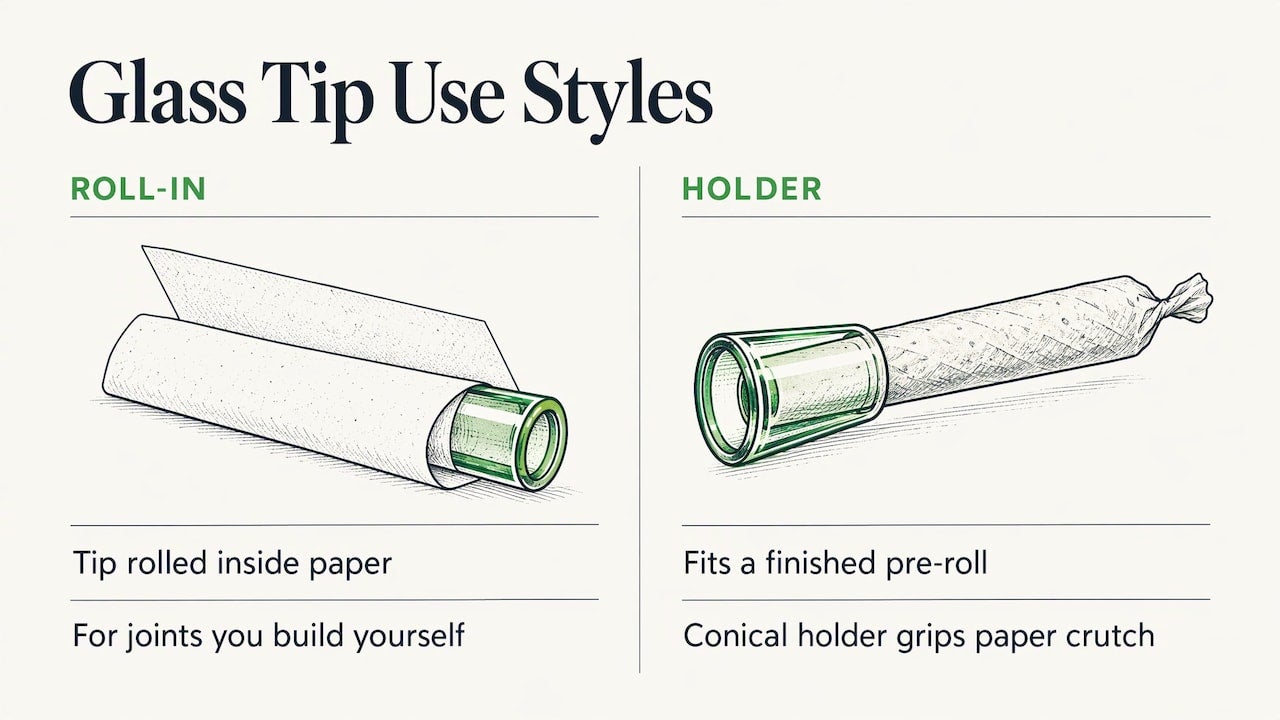
There are two common ways to use one. The first is rolling it inside the paper, which is what most of this guide covers. The second is pressing a finished pre-roll into an external glass holder, which tends to be conical so it grips the paper crutch. If you buy ready-made joints, our pre-rolled joints work well with a holder-style piece, and the roll-in style is for joints you build yourself.
What glass tips do for your joint
A stable mouthpiece
Paper crutches soften with moisture and can burn down near the end. Glass does neither. A tip keeps its shape from the first puff to the last, which means the opening stays round and the draw stays consistent. It also keeps your fingers and lips away from the ember, so you can smoke the joint down further without discomfort.
A barrier for loose flower
Anyone who has pulled a bit of ground flower into their mouth knows why a crutch exists. A glass tip does the same job and keeps loose herb from travelling through to the mouthpiece. If you grind finely, this is a real convenience.
Smoke that reaches you a little cooler
Glass is a poor conductor of heat, and the smoke passes through a tube that draws some of that heat away. Tips with internal indentations or a swirl design are made to give the smoke more contact with the glass. Many smokers describe the result as a smoother inhale. Think of it as a comfort feature rather than a transformation: the main reasons to use a tip are a stable draw, a clean mouthpiece and the reusability.
Neutral taste
Glass is inert, so it does not add a flavour of its own. If you care about tasting the terpenes in a good flower, a clean glass mouthpiece lets the herb speak for itself. Paper filters, by comparison, can add a papery note as they heat.
Less waste
A paper crutch is used once and thrown out. One glass tip replaces dozens of them over its life, which is why many regular smokers switch.
Glass tips vs. paper filter tips
| Glass tip | Paper filter tip | |
|---|---|---|
| Reusable | Yes, for years with care | No, one joint |
| Holds shape when damp | Yes | Can soften |
| Taste | Neutral | Can add a papery note near the end |
| Heat at the mouthpiece | Stays firm, keeps the ember away from lips | Can burn down close to the end |
| Rolling | Needs a snug wrap around a rigid tube | Rolls as part of the joint |
| Upfront cost | Higher, once | Low, per joint |
Both have a place. If you roll a joint now and then and like the simplicity of a card crutch, our HMP filter tips are an easy pick. If you roll regularly, a glass tip is the better long-term piece: you buy it once and keep using it.
How to choose the right size
Diameter is the first decision, and it follows the roll you usually make. The tip sits where the paper is gathered, so a tip that is too wide stretches a slim paper, and one that is too narrow leaves the mouthpiece loose and floppy.
A practical guide, in our own words from what we see in how people roll:
| Roll style | Suggested tip diameter |
|---|---|
| Slim rolls, pinners, single papers | 8 mm |
| Standard rolls, regular king-size papers | 10 mm |
| Fat rolls, cones, blunts | 12 mm |
Sizes between these exist, and wider tips of 14 mm and up suit very chunky builds. If you are between two sizes, think about how you hold a joint. A narrower tip feels closer to a classic cigarette, and a wider tip gives a more open draw.
Diameter is not the whole story. Length, wall thickness, the shape of the mouth end and any internal design all change how the tip feels in your mouth. Once you find a style you like, stay with it so every joint feels the same.
If you mostly use pre-rolled cones, a 12 mm tip is a natural match. Our pre-rolled cones are a good example of a format where a wider mouthpiece suits the shape.
How to roll a joint with a glass tip
The technique is nearly the same as a normal roll. The difference is that you are building around something rigid, so the wrap matters more.
- Pick the paper and the tip together. Choose the tip diameter for your paper size, as above. A king-size paper with a 10 mm tip is the standard pairing.
- Grind the flower evenly. A consistent grind packs evenly and avoids hard lumps that make the joint burn unevenly. Fine flower is no problem, since the tip stops loose herb from reaching your mouth.
- Place the tip at one end of the paper. Lay it along the edge so it sits flush with the end of the paper. A tip that pokes out can make the paper unroll unevenly.
- Add the flower. Spread it along the crease, up to the tip but not into it.
- Wrap snugly. Roll the paper around the tip a little tighter than you would around a card crutch, and press it into place without forcing the glass. Glass has no give, so a loose wrap lets the tip shift or slide out.
- Seal firmly. Lick the gum, seal it along the whole seam and give the mouth end a gentle twist so the paper grips the glass.
- Pack and light. Tap the flower down towards the other end, twist the tip end of the paper and light the far end.
The most common mistake is a loose wrap. If the tip rattles or slides when you hold the joint, it will fall out when you pick it up. Roll it again and wrap tighter.
If you would rather skip rolling, a pre-roll pairs with a holder-style glass piece with no wrapping at all. Browse our Wizard OG or Bread and Butter flower if you want to roll a few with your new tip.
Cleaning and caring for a glass tip
A glass tip lasts years if you look after it, and cleaning it takes a couple of minutes.
After every session: let the tip cool, then slide it out of the roach and rinse it under warm water. Resin that has just formed rinses off easily.
For a deeper clean: soak the tip in high-strength isopropyl alcohol for 10 to 15 minutes. Use a pipe cleaner or cotton swab to clear the inside, rinse with warm water and let it air dry completely before using it again. Some smokers add a pinch of coarse salt to the alcohol in a sealed bag and shake it to scrub the walls.
A few handling notes:
- Borosilicate is tough but it can crack if dropped on a hard surface. Keep your tips in a small case or zip-lock bag, especially if you carry them in a pocket or bag.
- Never put a tip back in a joint while it is still wet with alcohol.
- Keep alcohol away from flames and ventilate the room while you clean.
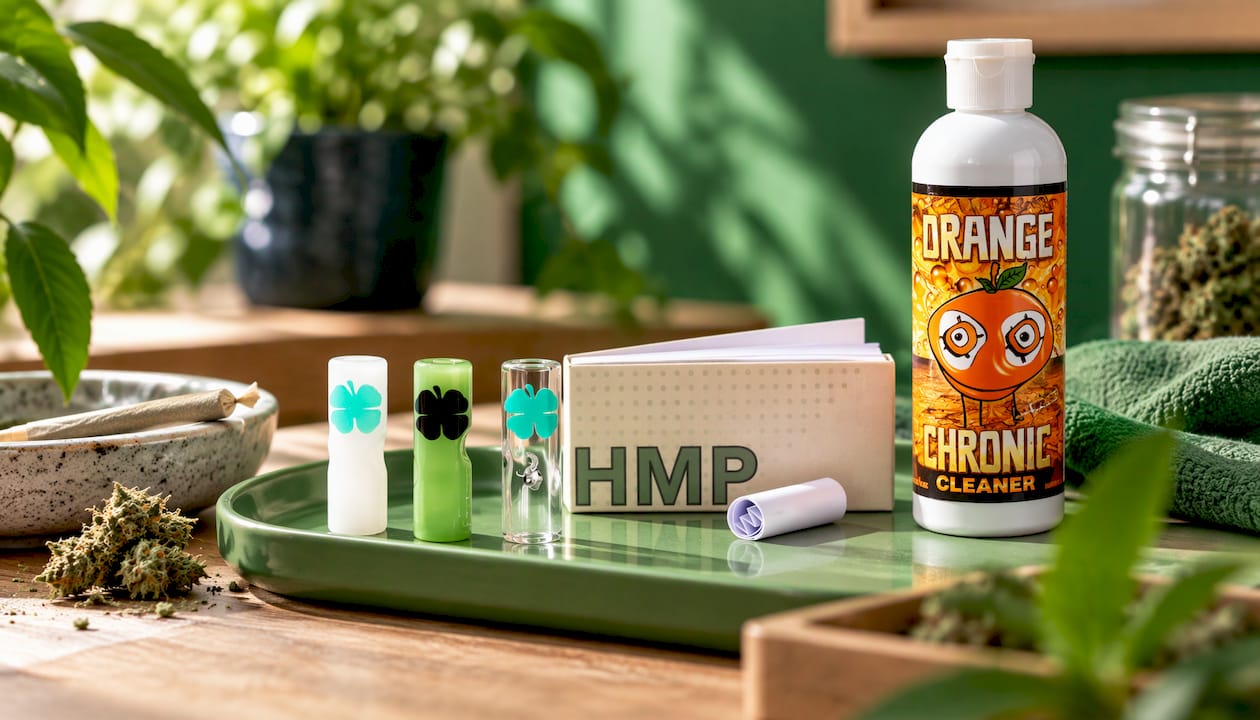
If you also keep pipes or bongs, the same alcohol-and-salt approach applies to them. Our guide on how to clean a bong walks through it, and the Orange Chronic glass cleaner is made for glass pieces.
Using glass tips with health in mind
Glass is a sensible material to put in your mouth. Health Canada advises that if you use a pipe, you choose glass or ceramic, because plastic and other materials can contain harmful chemicals that may be inhaled when heated. Health Canada’s guidance on inhalation accessories also states that smoking cannabis is the most harmful method of consumption and that the smoke contains many of the same harmful chemicals as tobacco smoke, including carcinogens.
That is useful when you choose how to consume. If you smoke, keep your tip and anything else you inhale through clean, and take fewer, slower puffs rather than long, deep ones. If you have a lung or heart condition, are pregnant or have questions about cannabis and your medications, speak to your doctor or pharmacist before you use it. Cannabis is for adults of legal age, and you should store it and any accessories away from children and pets.
Our perspective on glass tips
Most people come to glass tips because a paper crutch fell apart in a damp joint or burned down to the fingers. They stay because a tip makes every joint feel the same.
Our view is simple: if you roll more than the occasional joint, buy a glass tip in the size that suits your usual roll and stop thinking about the mouthpiece. It is a piece you buy once and keep using, which is a good fit for regular smokers who care about value as much as quality.
We built our shop around convenient, discreet ordering, so a tip, your flower and a glass cleaner can arrive together in privacy-focused packaging. Our loyalty program rewards frequent buyers, which makes the accessories and the flower you use them with easier to keep stocked.
A good tip, clean and cared for, should be one of the longest-lasting things in your rolling kit.
the author
Get your glass tip delivered
If you are ready to try one, our Lucky Farms glass tips are listed in our accessories range, and you can pair them with flower, pre-rolls or a glass cleaner in the same order. We offer same-day delivery across Canada, discreet packaging and a loyalty program for frequent buyers. Browse everything at XpressGrass.
Choosing a tip that fits how you smoke
A short checklist makes the decision easy.
- If you roll slim joints or pinners: an 8 mm tip keeps the mouthpiece tight and light.
- If you roll standard king-size joints: a 10 mm tip is the usual choice and the most versatile.
- If you smoke cones or blunts: go to 12 mm, so the tip fills the wide mouth end.
- If you travel or carry your tips: get a small case and one or two spares.
- If you smoke often: think about a second tip so you always have a clean one while the other is soaking.
Start with the size that matches your roll today, and adjust after a few joints. You will quickly feel whether you want more room in the draw or a firmer, narrower mouthpiece.
FAQ
Do glass filter tips actually cool the smoke?
Glass is a poor conductor of heat, so the tube draws some heat out of the smoke as it passes through. Tips with internal indentations or a swirl design give the smoke more contact with the glass. Most smokers notice a smoother, slightly cooler inhale, though the exact feel depends on the design.
What size glass tip should I buy?
Use 8 mm for slim rolls and pinners, 10 mm for standard king-size joints and 12 mm for fat rolls, cones and blunts. If you are unsure, 10 mm is the most common choice. Take length and mouthpiece shape into account too, since they change how the draw feels.
How do I clean a glass joint tip?
Rinse it under warm water after each use. For a deeper clean, soak it in high-strength isopropyl alcohol for 10 to 15 minutes, clear the inside with a pipe cleaner or cotton swab, rinse well and let it dry fully. Keep alcohol away from flames.
Can I reuse a glass tip?
Yes. That is the main advantage over a paper crutch. With regular cleaning and a case to protect it from drops, a borosilicate tip can last for years.
Is a glass tip safer than a paper filter?
A glass tip is a durable, heat-resistant mouthpiece, and Health Canada recommends glass over plastic for inhaled accessories. It does not change the fact that smoking cannabis carries health risks, so if you have a respiratory or heart condition or are pregnant, talk to your doctor first.

