


A cannabis rolling machine gives you an even, tightly packed joint without hand-rolling skill, but only if the machine makes the shape you want. Manual rollers make straight cylinders, cone fillers make cones, and electric units automate the packing. Match the device to the joint first. Price and brand come second. If you want the result without the learning curve, pre-rolled cones and pre-rolled joints skip the rolling step entirely, and we ship them across Canada, same-day delivery included, in discreet packaging.
TL;DR
- Decide the shape first: a manual roller makes a cylinder joint, a cone filler packs ready-made cones, and an electric machine automates the packing.
- Do not overfill. It is the most common reason for a joint that is too tight, burns unevenly or will not draw.
- A medium grind, an even layer and a few firm passes of the rollers do more for consistency than any brand.
- A flat rolling tray with a raised edge keeps the whole process tidy, and cleaning the machine regularly keeps it feeding paper smoothly.
- If you would rather not roll at all, pre-rolled cones and pre-rolls cover the same need. In Canada, accessories like rolling papers are legal products but come with age rules at purchase.
Table of Contents
- What a cannabis rolling machine actually does
- The main types of joint rolling machines
- Which type fits you
- How to use a manual joint rolling machine
- How to fill joint cones
- Choosing a rolling tray
- Keeping the machine in good shape
- Is a rolling machine worth it?
- Buying in Canada: what to know
- Our view on rolling machines
- Get your setup delivered
- FAQ
- Sources
What a cannabis rolling machine actually does
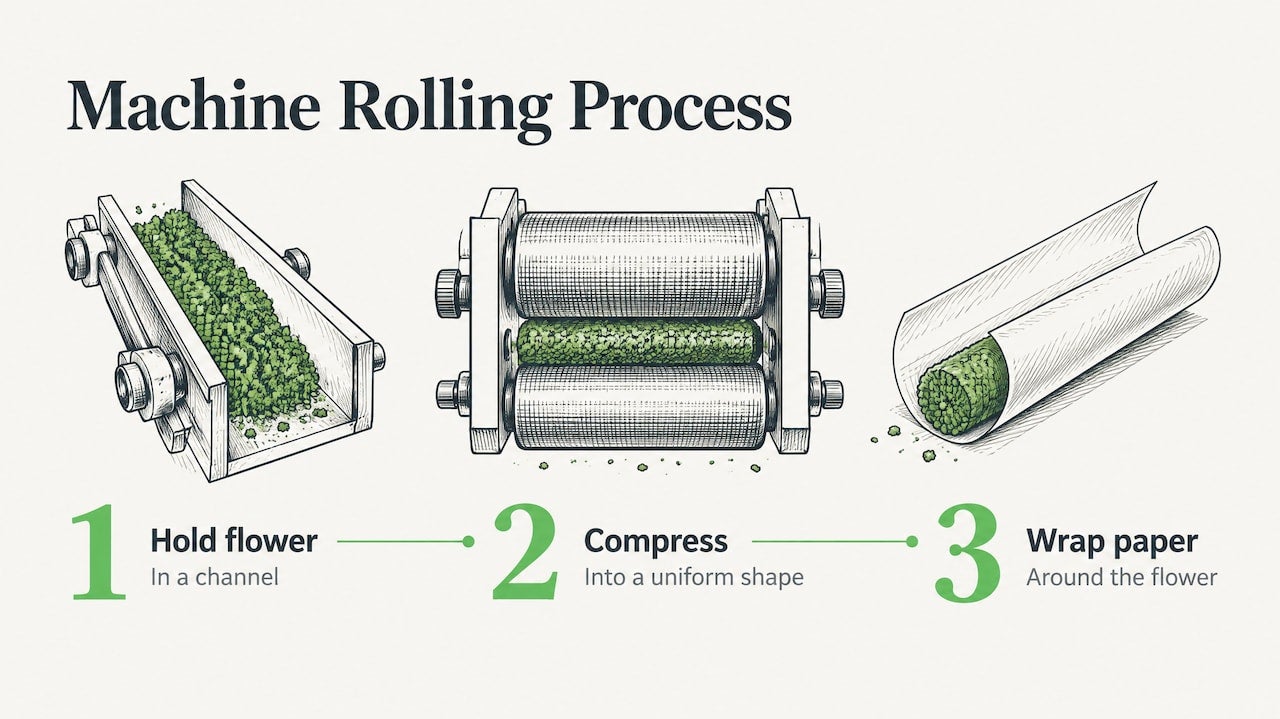
Hand-rolling a joint is a skill. You have to spread the ground cannabis evenly, shape it into a cylinder, tuck the paper around it and seal the edge without letting everything spill. A rolling machine takes over the hardest part. It holds the ground flower in a channel, compresses it into a uniform shape and helps wrap the paper around it.
The benefit is repeatability. Two joints from the same machine and the same amount of flower come out close to identical, which means a predictable burn and a predictable amount of cannabis per joint. That is useful if you are new to rolling, if you have limited dexterity, or if you simply want a few joints ready for the week without spending twenty minutes on them.
People search for this under many names: joint roller, joint rolling machine, weed cigarette roller. They all point to the same family of tools, and the differences between them matter more than the names.
The main types of joint rolling machines
Guides from across the accessories world sort these tools into a few clear classes. Choose by the shape you want to smoke.
Manual rollers
The classic. Two soft rollers sit in a hinged frame. You load ground cannabis into the channel, close the frame, turn the rollers to form a cylinder, feed a rolling paper in and roll it closed. They are small, portable, need no power and are the usual first purchase. A manual roller sized for a 1¼ paper makes a 1¼ joint, and a king-size paper needs a wider machine, so check that the machine width matches the paper you buy.
One limit is worth knowing before you buy: a manual cylinder roller physically cannot make a cone. If you want the tapered shape you see on dispensary pre-rolls, you need a different tool.
Cone fillers
A cone filler is a funnel or tray that holds pre-made paper cones upright while you pack them. You fill the tray with ground cannabis, slide a cone onto the funnel, pack it with a poker rod until it is full, then push the cone off and twist the tip closed. Product testing by Gear Patrol names the cone funnel as the easiest option and notes that the cone does the shaping for you, so the finished joint looks as good as a store-bought one when packed correctly. The trade is that cones cost slightly more than flat papers, but you skip licking glue and folding a filter.
Some cone fillers are multi-cone trays that load several cones at once, which suits anyone preparing joints for a group or for a week ahead.
Electric and automatic machines
Electric machines automate compression, rolling and ejection. Some also grind the flower first, and they suit high-volume users or anyone who finds fine hand movements difficult. They are larger than a manual roller and usually cost more, and many electric units at accessible prices are really motorized cone fillers rather than machines that roll flat papers. Read the product description to see which one you are getting.
Combination and specialty units
You will also see grinder and roller combinations that take whole flower to finished joint, crank rollers that let you control how densely the joint is packed, and cigarette injectors that stuff empty tubes. These are variations on the three main ideas above.
Which type fits you
| If you want | Best fit | Why |
|---|---|---|
| A straight joint, minimal gear | Manual roller | Portable, no power, simple to clean |
| A cone-shaped joint with no technique | Cone filler | The pre-made cone sets the shape |
| Many joints at once | Multi-cone tray or electric unit | Fills several in a single pass |
| Easier handling with limited dexterity | Electric unit | Automates the packing and rolling |
| No rolling at all | Pre-rolled cones or pre-rolls | Nothing to learn, nothing to clean |
If you are unsure, a cone filler is the forgiving choice for a beginner, since it relies on the cone rather than on your rolling touch.
How to use a manual joint rolling machine
The steps below follow the standard method described in Herb’s guide to using a joint roller. Each step has one place where it usually goes wrong.
- Grind the cannabis to a medium consistency. A grinder gives you an even texture. Stems, seeds and big chunks tear paper and block the rollers.
- Load 0.5 to 1 gram along the channel. Spread it evenly from end to end. This is where most people go wrong: they overfill. Start with less than you think you need, because you can always add more.
- Add a filter tip if you want one. A filter at one end gives the joint structure and keeps loose material out of your mouth.
- Close the rollers and turn them three or four times. Roll both sides away from you, or toward you if your model’s instructions say so, until the flower forms a firm, even cylinder. Compressing before the paper goes in is what stops a loose, lumpy joint.
- Insert the paper with the adhesive strip facing up and toward you. A paper fed in glue-side the wrong way will not catch properly.
- Roll until only the adhesive strip shows. Keep the pressure even so the paper does not wrinkle.
- Lightly moisten the adhesive, then give a final roll. Too much moisture weakens the paper and causes tearing.
- Open the machine and remove the joint. Tap or twist the open end to settle the contents.
The whole process takes under a minute once you have done it a few times. A properly packed joint feels firm but still lets air through when you draw on it.
Fixing common problems
- Loose joint: you underfilled. Fill to the top of the channel and make a few more passes with the rollers.
- Tight joint that will not draw: you overfilled or packed too hard. Use less, and press more gently.
- Paper tears: stems or chunks in the grind, or damp paper. Regrind and keep the paper dry until the final lick.
- Paper will not feed: it went in glue-side first, or the machine is upside down.
- Uneven burn, also called canoeing: the flower was spread unevenly. Level the material before rolling.
How to fill joint cones
Cones are the simplest route to a good-looking joint. Here is the routine, drawing on the method in Gear Patrol’s rolling machine testing:
- Grind the cannabis and pour it into the top tray of the filler.
- Slide a cone onto the funnel, filter end down.
- Pack it gradually with the poker rod, adding flower as it settles, until the cone is full.
- Push the finished cone off the funnel.
- Twist or crimp the tip closed so nothing falls out.
Pack in repeated gentle passes rather than one hard push. Even tamping prevents airy pockets, which are the usual cause of an uneven burn.
When you buy cones, check the size against how much you plan to smoke. Shorter cones hold a fraction of a gram, a 1¼ cone holds more, and king-size cones hold roughly a gram or beyond. Pick a size that matches your usual session, and make sure your filler is made for that cone size, because fillers are built for particular cone lengths.
If you would rather not fill them yourself, we carry ready-made options: Blazy Susan pre-rolled cones are one we stock, for those who want the cone and will do the packing, and our pre-roll range covers those who want the joint finished.
Choosing a rolling tray
A rolling machine works best with a good surface under it. A weed rolling tray catches stray flower, gives you a flat place to grind and keeps papers, filters and lighter in one spot. A well-chosen tray cuts setup and cleanup time noticeably.
Gear Patrol’s tray guide recommends a flat, smooth surface with a raised edge, in a size that suits your rolling volume and the space you have. Optional extras include a joint holder, a spot for the grinder, bud storage and a place for ash.
What to look at:
- Size. The most common mistake is buying too small. If your machine, grinder and papers do not fit comfortably, flower ends up on the table.
- Material. Metal wipes clean and lasts. Wood looks good but needs to be kept dry. Glass is smooth but needs careful handling. Pick the one that matches how and where you will use it.
- Raised edges. They contain loose material and give you something to push paper against when rolling.
- Travel needs. A lid keeps contents in place if you carry the tray.
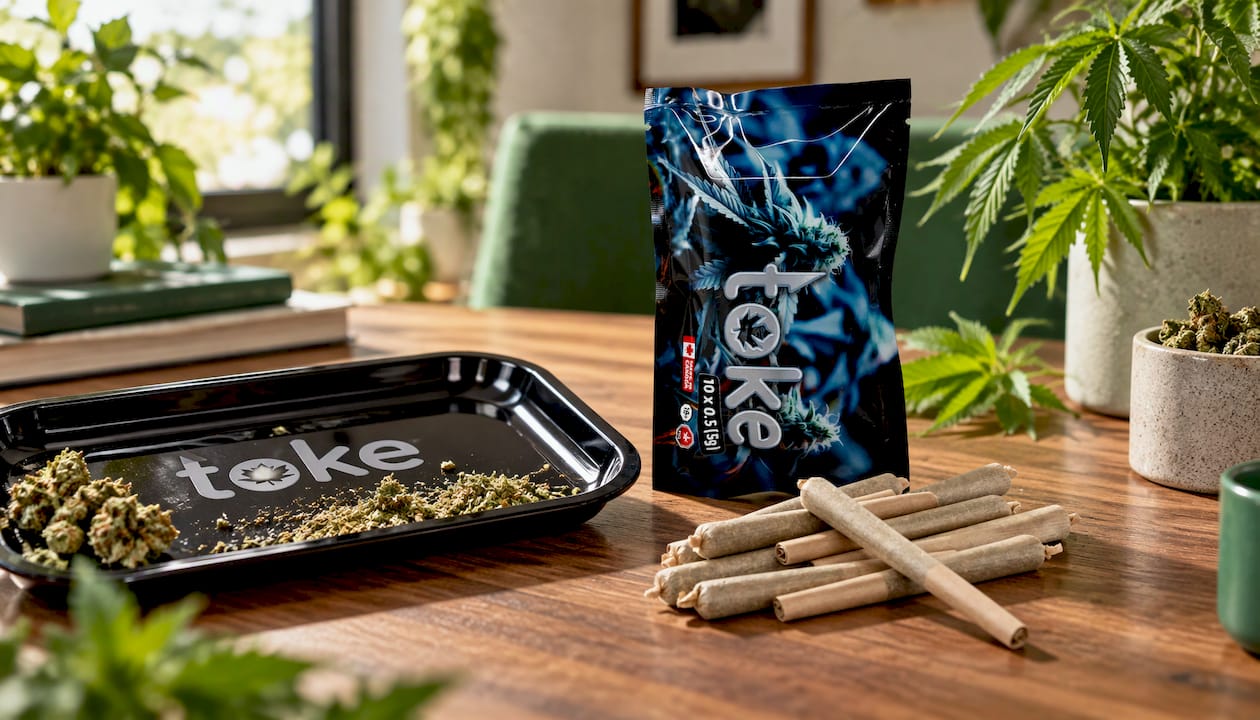
If you want one that is ready to go, our Toke rolling tray is available through the same order as your flower, and our accessories category lists grinders and papers to go with it.
Keeping the machine in good shape
Rollers pick up resin with use, and a sticky roller will not feed paper cleanly. A little routine cleaning prevents that.
- After a session, run a spare piece of rolling paper through to lift loose residue.
- Every so often, brush out the flower residue and wipe the rollers with a cotton swab lightly dampened with isopropyl alcohol. Let everything dry fully before the next use, and never submerge the machine in water.
- Herb’s guide suggests cleaning the machine every 10 to 20 uses, which is a handy rule of thumb if you are not sure when it is due.
- Store the machine with the rollers open or lightly closed so they keep their shape.
For trays, wipe with a damp cloth, and use a little isopropyl alcohol on a swab for sticky resin. Dry them right away.
Is a rolling machine worth it?
It is worth it when you want consistency, speed or an easy way into rolling. A quality roller closes firmly and keeps the flower in place, while a poorly made one can roll too tight or unevenly and give you a hard draw, so buy the sturdier of two similar options. A cone filler gives you good-looking joints with almost no skill, at a slightly higher cost per cone.
It is less compelling if you only smoke occasionally or you want the result with no effort and no equipment to clean. In that case the shortest path is a joint someone else has already rolled. Our post on how pre-rolls make life easier walks through why many customers go that way, and what to look for in pre-rolls covers choosing between them.
Buying in Canada: what to know
In Canada, rolling accessories are legal products. The federal Cannabis Act defines a cannabis accessory as an item represented as being used to consume cannabis, and the definition includes rolling papers or wraps, holders, pipes, water pipes, bongs and vaporizers. The same law prohibits selling an accessory to a young person, meaning anyone under 18, and a seller cannot rely on a defence if it did not take reasonable steps to check age. Provinces and territories can set their own minimum age, so check the rule where you live before ordering.
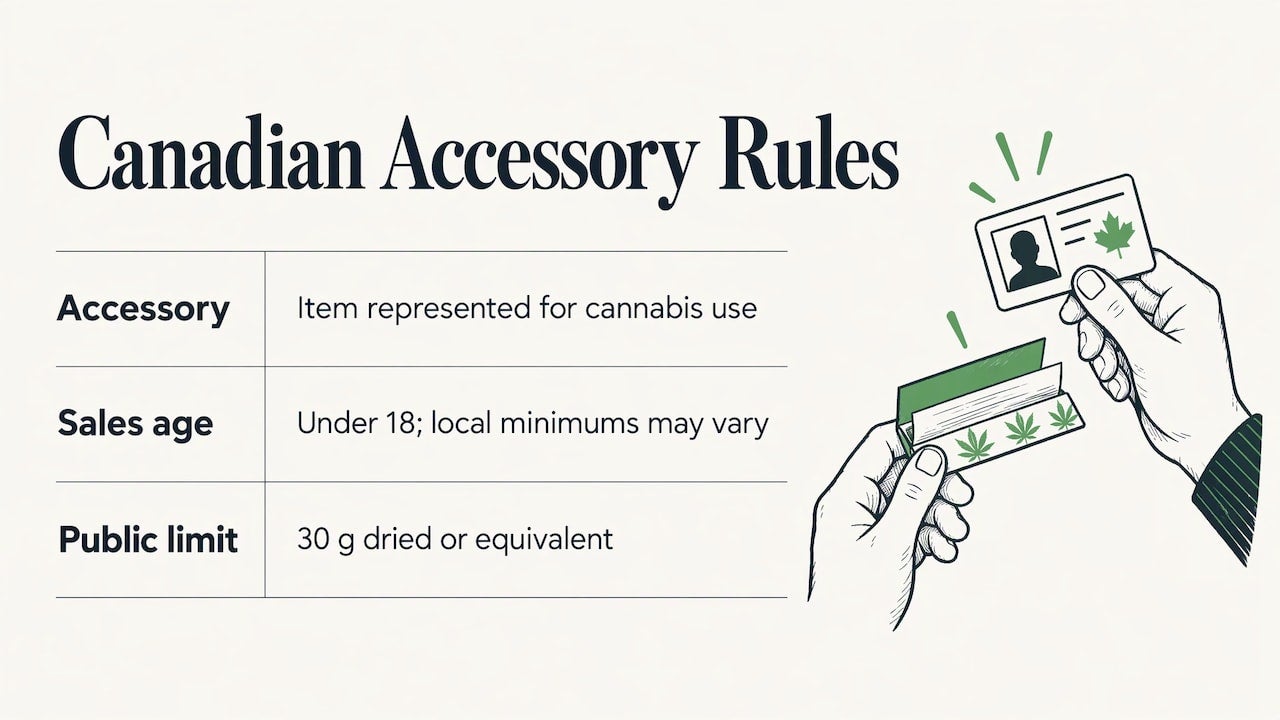
One more point for anyone filling several joints at once: unless authorized, an adult is prohibited from possessing more than 30 grams of dried cannabis, or its equivalent, in a public place, according to the Act’s text. A batch of joints you carry out of the house counts toward that limit.
Our view on rolling machines
We hear the same question from customers who are new to rolling: which machine should I buy? Our answer starts with the joint, not the machine. Decide whether you want a cylinder or a cone, how many you want to make at once and how much time you want to spend on it.
For people who want a cylinder and are happy to learn a simple routine, a manual roller is a sound, portable start. For people who care about the look and ease of a cone, a filler removes most of the skill. And for people who want the best result with the least effort, a good pre-roll or a pre-rolled cone you pack yourself does the job without any equipment to clean or store.
That is why our range covers both ends. You can build your setup with a tray, papers and a grinder from our accessories, pick up cones, or order pre-rolls. Whatever you choose, we pack it discreetly and deliver same-day, and our loyalty program rewards you for coming back.
the author
Get your setup delivered
If you are putting together your rolling kit, you can order the flower, the cones or pre-rolls, a tray and the accessories in one go from XpressGrass. We offer same-day delivery across Canada and discreet packaging focused on privacy, and our loyalty program rewards frequent buyers. Start from our flower category, where ounces start at $79, or browse the accessories page for grinders and papers.
FAQ
What is the best rolling technique for a beginner?
Start with a cone filler or a manual roller rather than rolling free-hand. Grind the flower to a medium texture, use less than you think you need, and compress it evenly before adding the paper. Overfilling is the most common beginner mistake, so under-fill first and adjust.
Can you use a rolling machine for blunts?
Only if the machine is wide enough for the wrap. Standard manual rollers are sized for 1¼ and king-size papers, and blunt wraps are usually thicker and wider. Look for a machine whose product description says it handles wraps, and do not force a wrap into a roller made for thin paper.
Is a joint rolling machine worth it?
It is if you want consistent joints without developing the hand skill, or if you roll often enough to save real time. A quality machine rolls more evenly than a cheap one with thin vinyl sheaths, and a cone filler gives good-looking results with almost no skill. If you roll rarely, pre-rolls or pre-rolled cones are the effortless alternative.
Can a manual roller make cone joints?
No. A manual roller forms a straight cylinder. For cones you need a cone filler and pre-made cones, so choose the tool by the shape you want before you worry about brand or price.
Is it legal to buy rolling accessories online in Canada?
Yes. Rolling papers, wraps, holders and similar items are cannabis accessories under federal law, and the Cannabis Act prohibits selling them to anyone under 18. Provinces can set a higher minimum age, so check the rule for your province when you order.
Sources
- Cannabis Act, full text (Justice Laws Website)
- Cannabis Act, full text, possession limits (Justice Laws Website)
- The Best Rolling Machines We Tested (Gear Patrol)
- The 12 Best Rolling Trays (Gear Patrol)
- How to Use Joint Rolling Machines (Herb)

