


Blue Dream is a sativa-leaning hybrid of Blueberry and Haze, known for a sweet berry aroma, moderate-to-high THC and very little CBD. It is one of the most recognized names in cannabis, but the name alone does not tell you what is in the jar. The label does. This guide covers what Blue Dream is, what to expect from it, how to read a Canadian product label, and how to order it from us with discreet packaging and same-day delivery.
TL;DR
- Blue Dream is generally described as a sativa-dominant hybrid, a Blueberry and Haze cross, with sweet berry, herbal and citrus notes.
- Typical reported THC runs roughly 17% to 24% with under 1% CBD, but the figure on your package is the one that counts.
- Reported effects are uplifted, relaxed and sociable, yet they depend on dose, product and your own tolerance.
- Check THC, CBD, lot number and packaging date on the label, and start low with any new product.
- You can browse Blue Dream flower at XpressGrass, with discreet packaging and same-day delivery across Canada.
Table of Contents
- What Blue Dream is and where it comes from
- Is Blue Dream an indica or a sativa?
- Aroma, flavor and terpenes
- How strong is Blue Dream?
- What Blue Dream feels like
- Is Blue Dream top shelf?
- How to read a Blue Dream label in Canada
- Using Blue Dream responsibly
- Our perspective on buying Blue Dream
- Order Blue Dream from XpressGrass
- FAQ
- Sources
What Blue Dream is and where it comes from
Blue Dream is a hybrid cannabis strain usually described as a cross of Blueberry and a Haze variety. High Times’ strain profile notes that the exact Haze parent is disputed. It also cautions that later seed versions, including crosses using Super Silver Haze, should not automatically be treated as genetically identical to the original cutting.
That detail matters when you shop. “Blue Dream” on a menu can mean the original clone-based lineage or a later seed line sold under the same name. Two products with the same name can therefore differ in smell, potency and feel. If you are curious how the seed side of the story works, Blue Dream feminized seeds show how the name is carried into new seed lines.
The practical takeaway: treat the name as a starting point, a style of flower, and let the batch information on the package do the rest of the work.
Is Blue Dream an indica or a sativa?
Most listings call it sativa-dominant, and the figure you will see most often is roughly 60% sativa and 40% indica. That is a description of its reported lineage, not a guarantee of how it will feel.
The Cannigma points out that research has not established that indica and sativa labels reliably decide whether effects are uplifting or relaxing. So read “sativa-dominant” as a rough guide to the plant’s growth and character, then look at the things that shape the experience more directly: THC level, terpene profile, dose and how you consume it.
Aroma, flavor and terpenes
Blue Dream is loved for its flavor. Expect sweet blueberry and berry notes up front, often with herbal, citrus or earthy undertones. WeedDB Canada’s October 2026 guide says individual batches vary in how fruity, herbal or woody they smell and taste.
Terpenes are the aromatic compounds in cannabis that shape smell and flavor. References commonly list four for Blue Dream:
| Terpene | Typical aroma note |
|---|---|
| Myrcene | Earthy, musky, ripe fruit |
| Pinene | Pine, fresh herbal |
| Caryophyllene | Peppery, warm spice |
| Limonene | Bright citrus |
The Cannigma lists the same four terpenes in its profile, though references do not always agree on exact figures or order. Terpene content changes with growing conditions, harvest and storage, so the smell of the flower in front of you is a better guide than any chart. For a deeper look at why cannabis smells the way it does, see our guide to cannabis terpenes.
How strong is Blue Dream?
Blue Dream sits in the moderate-to-high range for THC, the compound mainly responsible for the intoxicating effect. WeedDB Canada gives typical ranges of 17% to 24% THC and less than 1% CBD. The Cannigma reports a 19.2% THC figure in its own profile. CBD is the non-intoxicating compound that many people look at as a counterweight to THC, and Blue Dream usually has only trace amounts.
These are profile averages, not lab results for the flower you will receive. A batch of Blue Dream can come in below or above the range. If someone asks whether Blue Dream is a strong strain, the honest answer is that it is often a potent one by name, and that your package label tells you exactly how potent.
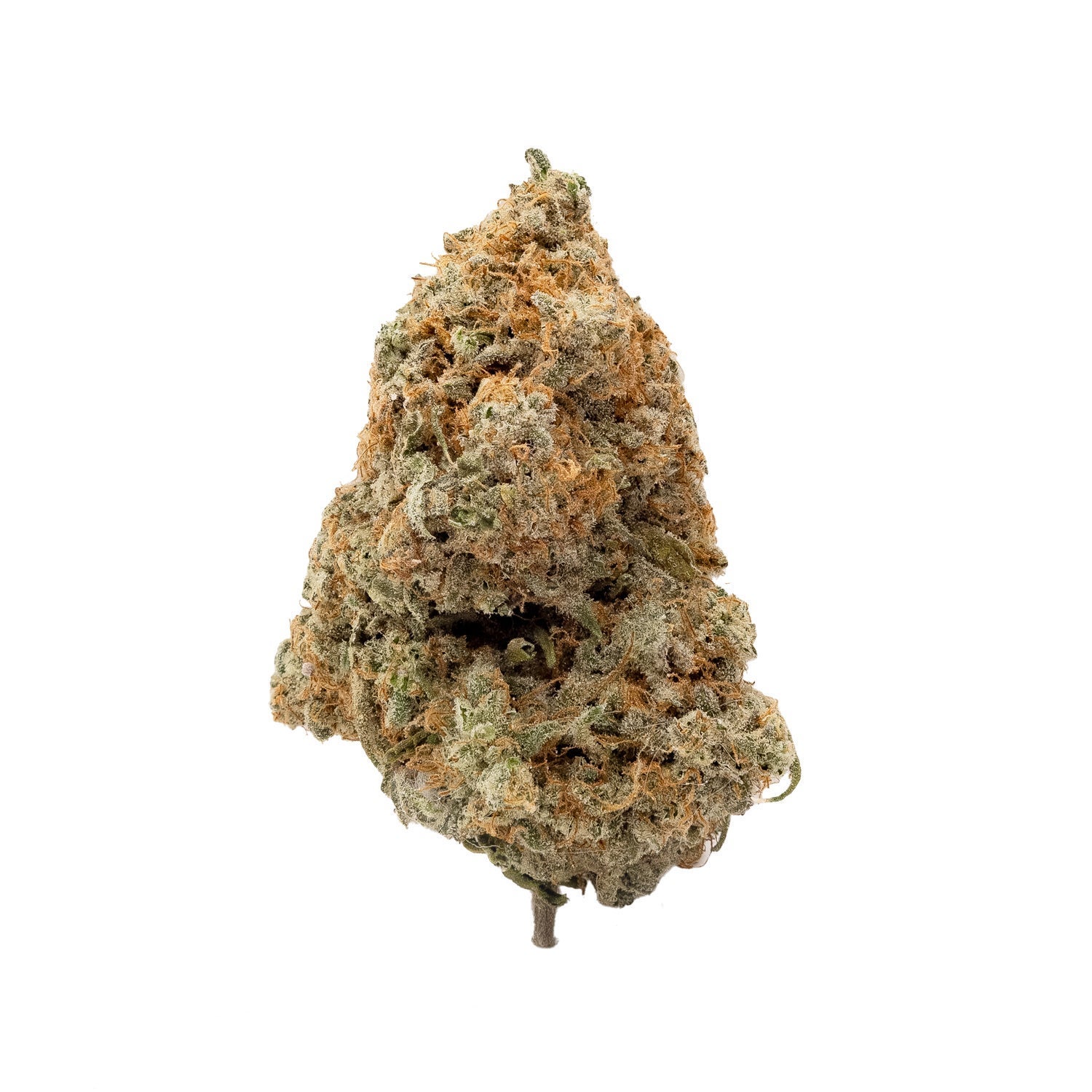
Health Canada’s lower-risk cannabis use guidance, published in 2019, advises consumers to understand a product’s THC content, because higher THC potency is associated with more acute and long-term problems. With a 20% THC flower, that is worth taking seriously, especially if you are newer to cannabis or returning after a break.
What Blue Dream feels like
Reported effects are happy, uplifted, relaxed, creative and sociable. WeedDB Canada also reports dry mouth, dry eyes and occasional anxiety at higher amounts. Many people reach for it in the daytime or early evening because of its reputation for a bright, easygoing head feel paired with a gentle body calm.
Health Canada puts the limit of any strain-based expectation plainly: individual responses differ, and dose, potency and consumption method all play a part. Two people can take the same Blue Dream and describe it differently.
If anxiety is a concern for you, read our guide on choosing and using weed for anxiety carefully before you pick a THC level.
Is Blue Dream top shelf?
“Top shelf” is a retail term, not a regulated grade. What a shopper can actually judge is the product in front of them. Here is what to look at beyond the name:
- THC and CBD on the label. This tells you the real potency of the batch.
- Lot number and packaging date. They show which batch you have and how recent it is.
- Aroma. Blue Dream should smell sweet and fruity, with herbal or citrus notes, not flat or hay-like.
- Appearance and format. Flower comes in different grades and sizes, and smaller buds can be a good-value way to buy the same strain.
- Which lineage. Since the name covers clone and seed versions, the producer and batch details help you compare like with like.
Smalls are the smaller buds trimmed off larger flowers. They usually carry the same strain character at a friendlier price point, which suits value-minded shoppers. Our Blue Dream (Smalls) from Lucky Farms is one example, and Superdank Blue Dream is another way into the strain.
How to read a Blue Dream label in Canada
Legal cannabis sold in Canada has standardized packaging, so you can compare products fairly. Health Canada’s packaging and labelling guide says required labels include THC and CBD content, a lot number and a packaging date. The way THC and CBD are displayed depends on the product class and unit type. Labels also carry a mandatory health warning, with the standardized cannabis symbol where applicable, and packaging must be child-resistant.
Health Canada’s guide to reading a cannabis label explains that this information lets you assess the specific product instead of relying on a strain name alone. A quick routine:
- Find the THC figure and compare it with what you are comfortable with.
- Check the CBD figure. Blue Dream is usually low in CBD.
- Note the lot number and packaging date for your own records.
- Keep the product in its child-resistant packaging, away from children and pets.
We list the strain, product format and details on each product page so you can see what you are choosing before you order.
Using Blue Dream responsibly
Because Blue Dream is often a higher-THC flower, how you start matters more than the strain name.
Smoking or vaping. Health Canada’s lower-your-risks guidance suggests starting with 1 to 2 puffs of a vape or joint at 10% THC or less. Full effects from inhaled cannabis can take up to 30 minutes, so wait before taking more. Because Blue Dream often tests above 10% THC, take that as a reason to keep the first dose small.
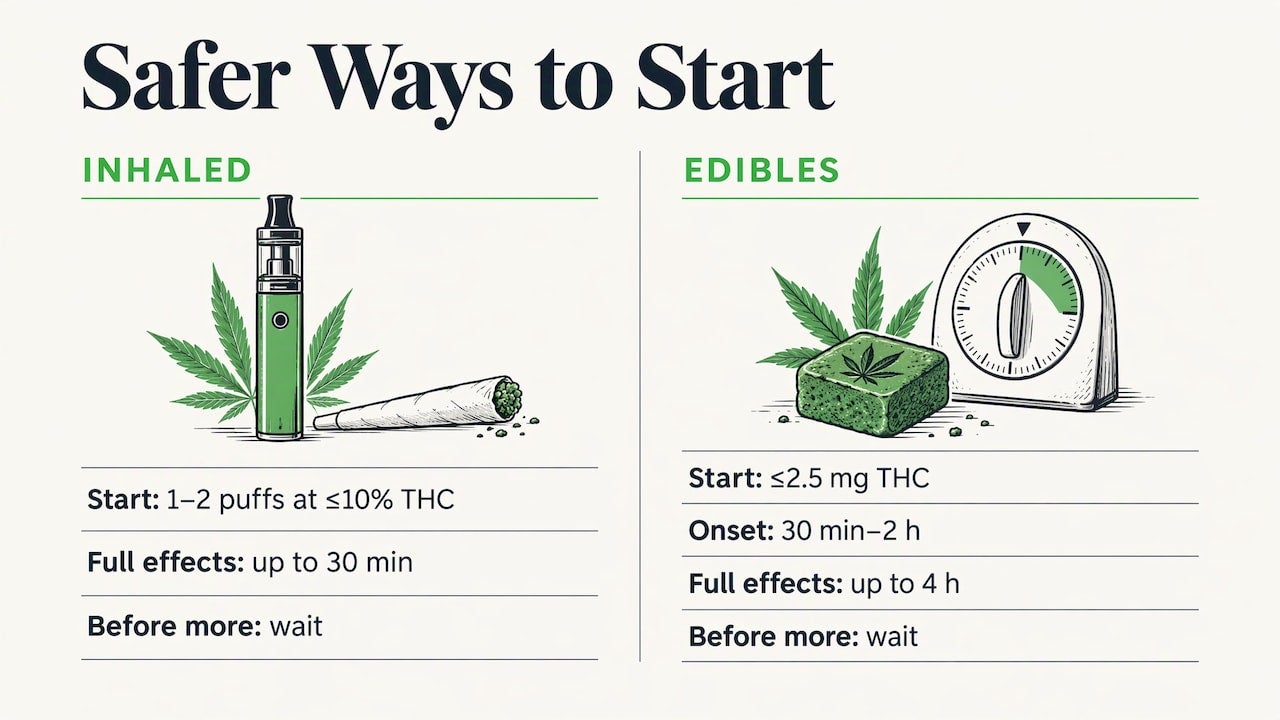
Edibles. If you use a Blue Dream edible or infused product, the same source says effects may begin in 30 minutes to 2 hours and full effects can take up to 4 hours. Its lower-risk advice is to look for edibles with 2.5 mg of THC or less and to wait before consuming more. Our guides to dosing cannabis edibles, splitting gummy doses and microdosing gummies walk through the numbers.
Driving and alcohol. Health Canada’s lower-risk guidelines say not to drive or operate machinery during acute effects. They advise at least 6 hours without driving after use and warn that alcohol can amplify impairment when combined with cannabis.
Mood and focus. Health Canada’s consumer sheet on edibles notes that THC can cause euphoria, drowsiness, anxiety and impaired memory, concentration or reaction speed.
Adults over 55. Health Canada’s guidance for adults over 55 advises lower-THC products with equal or higher CBD where possible, since Blue Dream is typically high in THC and low in CBD. Our overview of how seniors can benefit from medical cannabis covers that group in more detail. If you take medication or have a health condition, talk with your doctor or pharmacist before using cannabis.
Our perspective on buying Blue Dream
We think the best way to buy a popular strain is to buy the batch, not the name. Blue Dream is a good example: it is a favorite for its sweet berry flavor and easygoing character, yet the same name can cover different lineages and potencies.
That is why we keep the buying experience simple. Our shoppers can browse flower by strain, see what each product is, and choose between formats such as smalls when they want the strain at a friendlier price. Our loyalty program rewards frequent buyers, and our mix-and-match bundles and ounce deals suit people who find a strain they like and want to stock up.
Privacy matters just as much to us. Orders ship in discreet packaging, and same-day delivery across Canada means you do not have to plan around a store’s hours. Check the label, start low, and enjoy the strain at a pace that suits you.
the author
Order Blue Dream from XpressGrass
If you are ready to try it, start with Blue Dream (Smalls) from Lucky Farms or Superdank Blue Dream. Both sit in our Flowers category, alongside edibles, extracts, vapes and CBD products if you would rather try a different format.
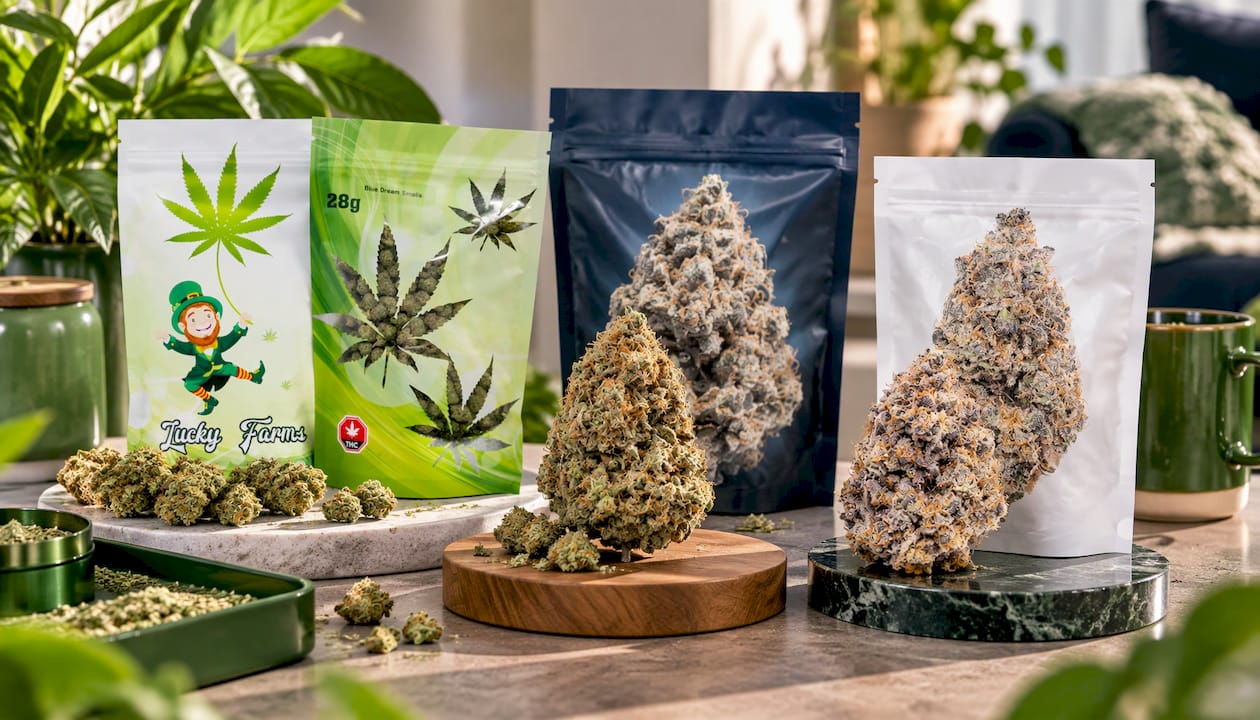
We offer same-day delivery across Canada, discreet packaging focused on privacy and a loyalty program for frequent buyers. You can see everything on our online dispensary. If you like the berry-forward profile and want something with a different name, our Forbidden Dream page is another place to look.
FAQ
Is Blue Dream an indica or sativa?
Blue Dream is usually described as a sativa-dominant hybrid, often quoted at about 60% sativa and 40% indica. Because indica and sativa labels do not reliably predict effects, the THC level, terpenes and your dose will tell you more.
Is Blue Dream a strong strain?
Typical reported THC is about 17% to 24%, with less than 1% CBD, which is moderate to high. Those are profile averages, so check the THC figure printed on your package and start with a small amount.
What does Blue Dream feel like?
People commonly report feeling happy, uplifted, relaxed and sociable, with a sweet berry taste. Dry mouth and dry eyes are common, and higher amounts can bring anxiety for some people. Effects vary with dose, product and tolerance.
What terpenes are in Blue Dream?
Myrcene, pinene, caryophyllene and limonene are the ones most often listed. Exact levels vary by batch, so the aroma of the flower and the label on the package are your best guides.
Sources
- Blue Dream: High Times Strain Profile
- Blue Dream Marijuana Strain Review, The Cannigma
- Blue Dream strain: indica or sativa? Effects and THC, WeedDB Canada
- Cannabis: lower your risks, Health Canada
- Canada’s lower-risk cannabis use guidelines, Health Canada
- Packaging and labelling guide for cannabis products, Health Canada
- How to read and understand a cannabis product label, Health Canada
- Health effects of cannabis on adults over 55, Health Canada
- Consumer information sheet on edibles, Health Canada

