

A high dose edible is one that delivers well above the 2.5 mg of THC that public health bodies suggest for a starting dose. In practice, most experienced consumers mean 10 mg or more per serving, and many mean 25 mg, 50 mg or beyond. This guide explains how strength is labelled in Canada, how to tell per-piece THC from per-package THC, how long strong edibles last, and how to dose them without a bad night.
TL;DR
-
Strength has two numbers: THC per piece and THC per package. A pack of 1,000 mg or 1,500 mg is not one serving, it is many.
-
Health guidance says effects can start after 30 minutes to 2 hours and take up to 4 hours to peak. Never take more before then.
-
Higher THC raises the risk of anxiety, paranoia and impairment, so work up in small steps and keep the day clear.
-
Do not drive after a strong edible, even if you feel fine.
-
If it goes wrong, call 1-844-POISON-X (1-844-764-7669), or 9-1-1 for an emergency.
Table of Contents
What counts as a high dose edible?
There is no legal definition of “high dose”. It is a relative term, and it shifts with tolerance. A 5 mg gummy is a full dose for a newcomer and barely noticeable for a daily consumer.
Here is a practical way to think about it:
| Per-serving THC | How it is usually described |
|---|---|
| 1 to 2.5 mg | Starting dose, the level public health guidance recommends first |
| 5 mg | Low to moderate |
| 10 mg | Moderate, and a strong dose for infrequent users |
| 20 to 30 mg | High, a dose for people with established tolerance |
| 50 mg and up | Very high, for experienced consumers only |
A Canadian Medical Association Journal editorial notes that a typical intoxicating dose of edibles contains 10 to 30 mg of THC. That is a useful anchor: once you pass 10 mg in one sitting, you are in high dose territory for most people.
Per piece versus per package
This is the number that trips people up. A bag of gummies might say 1,000 mg or 1,500 mg on the front. That is the total for the whole pack. The dose you eat is the THC in each piece, which you find by dividing the total by the piece count, or by reading the per-unit figure on the label.

Under Canadian rules, labels for edibles in discrete units must state each unit’s potential THC yield as “Total THC per unit” and the overall “Total THC”. Health Canada also explains that on the front of a label, THC for edibles can be shown per unit or as a total amount, so two products with the same headline number can be very different in strength per bite.
A quick example: a pack with 1,000 mg total and 40 gummies is 25 mg per gummy. The same 1,000 mg across 100 pieces is 10 mg each. Same headline, very different evening.
What Canadian rules say about edible strength
Regulated edibles in Canada are capped. Health Canada’s composition guide states that the THC in a discrete unit must not exceed 10 mg, and that the total THC in an edible cannabis immediate container must not exceed 10 mg as well, for example two units of 5 mg each. The packaging and labelling guide repeats the same limit in its table of THC limits.
That is why the shelf in a provincial retail store tops out at 10 mg per package, and why people looking for something stronger search online. Health Canada also notes that cannabis extracts can contain up to 1,000 mg of THC per container, because extracts are not meant to be consumed the way food is.
The practical lesson is the same whatever you buy: the label on the package is your dosing tool. Find the per-piece number, know the piece count, and decide your portion before you open it.
How long strong edibles take, and how long they last
Edibles are processed through digestion and the liver, so they behave differently from smoking or vaping. According to the BC Cannabis Edibles Fact Sheet:
-
Effects begin 30 minutes to 2 hours after eating.
-
Full effects can take up to 4 hours.
-
Intoxicating effects can last up to 12 hours, with residual effects for up to 24 hours.
-
Onset varies with body weight, metabolism, sex and whether you ate on an empty stomach.
With a high dose, every one of those windows stretches. A 50 mg edible does not just feel stronger, it can feel longer, and it can leave you groggy the next morning. Plan the evening accordingly. Our guide on how long edibles last goes deeper on timing.
Risks that rise with potency
Higher THC means a higher chance of unwanted effects, and Health Canada says so directly. Its health warning messages state that higher THC increases the risk of adverse effects including paranoia, anxiety and dependence, and that the risk of psychotic symptoms is greatest for people under 25 or using higher-THC products.
The province of Manitoba lists what overconsumption of edibles can look like: sleepiness, confusion, dizziness, clumsiness, fainting, a fast or pounding heartbeat, panic attacks, paranoia and, in serious cases, seizures. The same guidance recommends waiting at least four hours before a second serving.
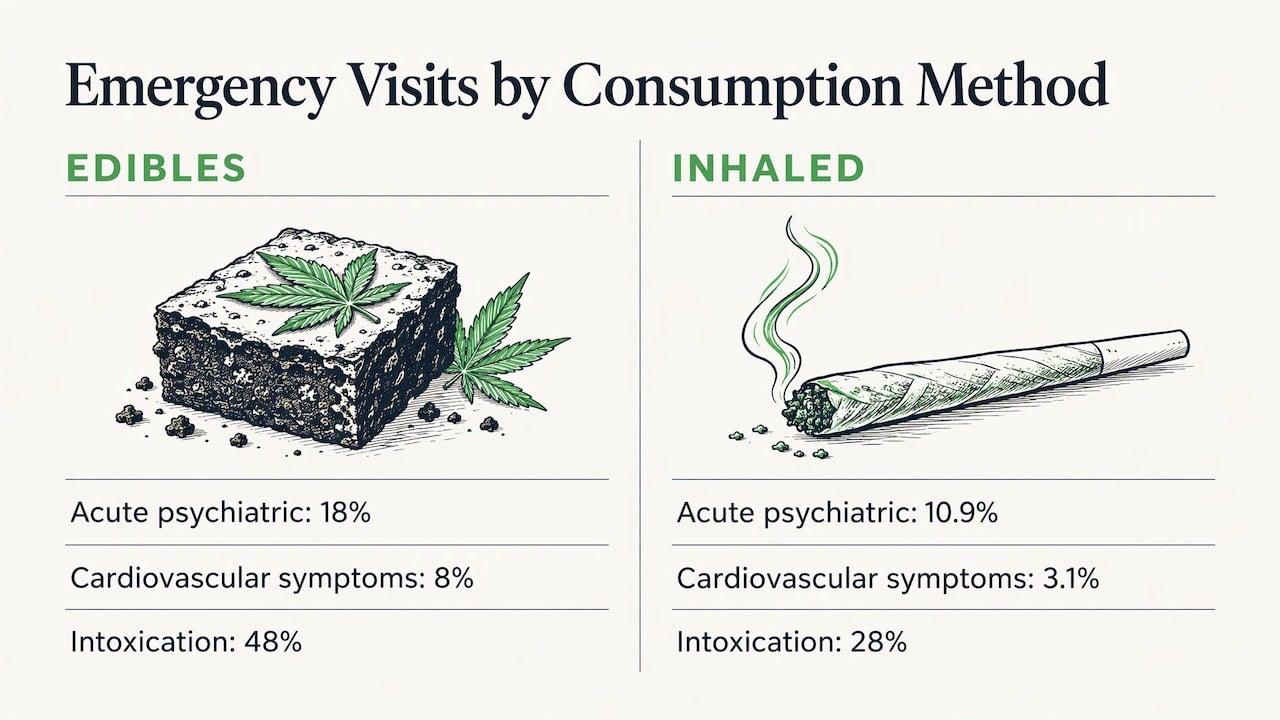
The CMAJ editorial cited above also reports on a study of 9,973 cannabis-related emergency visits. Edible users had more visits for acute psychiatric conditions (18% versus 10.9%), cardiovascular symptoms (8% versus 3.1%) and intoxication (48% versus 28%) than people who inhaled. The editorial points to “dose stacking” as a driver: people used to the instant effect of smoking eat more before the first dose has peaked.
Driving and strong edibles
A 2026 CAMH study in JAMA Network Open tested commercially available edibles at 2 mg, 10 mg and 20 mg of THC. Driving performance worsened with dose, and blood THC levels stayed below or near common roadside thresholds even at 20 mg. In other words, you can be impaired without a blood test showing it. If you take a high dose, do not drive, and arrange a ride or a night in.
How to dose a high dose edible safely
Tolerance is personal, so the aim is not a universal number but a method that keeps you in control.
-
Read the label first. Find THC per piece and pieces per pack. Write it down if the numbers are close to your limit.
-
Start where public health guidance starts. Health bodies, including the Council of Chief Medical Officers of Health, advise 2.5 mg of THC or less for a first-time or infrequent user. Experienced consumers can scale up from their own known comfortable dose, but should do it gradually.
-
Divide before you eat. The CMAJ editorial notes that the difficulty of splitting edibles into small portions is a common reason for overdose. A gummy that is 25 mg whole is hard to cut cleanly, so buy a piece strength you can eat whole or split with a clean cut, and do it before you start.
-
Wait. The BC fact sheet suggests waiting at least two hours before a second 2.5 mg dose. Windsor-Essex County Health Unit suggests four hours before having more. Using the longer window is the safer habit with strong products.
-
Set the scene. Pick a comfortable place, people you trust and at least eight hours free, as the BC guidance recommends.
-
Eat something. Onset and intensity change on an empty stomach, so a meal beforehand makes the experience more predictable.
-
Store it out of reach. Edibles look like regular candy. The CCMOH warns of a higher risk of accidental poisoning in children and pets, so keep packs in a locked or child-resistant container.
If you want a worked method for building up, see our edible dosing and THC content guide.
Choosing a format for a stronger dose
Format changes how easy it is to hit your target dose.
-
Gummies are the most common high dose format because the piece strength is consistent and they are easy to portion. Our comparison of gummies versus other edibles covers the differences in effects and safety.
-
Chocolates and baked goods often have uneven distribution across a bar or cookie, which makes portioning harder. Look for a clear per-piece figure.
-
Sour coated and infused gummies can differ in how the THC is delivered, which is explained in our sour coated versus infused gummies article.
-
Drinks and mints are lower-dose formats, useful for fine-tuning rather than going high.
If you tend to feel anxious with THC, our article on cannabis edibles for anxiety and our explainer on CBD versus THC help you think about balance.
Perspective: why we think label clarity matters most
Most of the trouble we hear about with strong edibles has nothing to do with the product being “too much”. It comes from a number being misread. A pack that says 1,500 mg looks like one huge dose, when it is really a supply of many measured pieces.
That is why we built our high dose range around a simple idea: give experienced customers the strength they are looking for, in a format that is easy to portion, and make the shopping experience clear enough that you know what you are choosing. Gummies suit that purpose because every piece is meant to carry the same amount.
We also pair it with what customers tell us they value: discreet packaging, same-day delivery across Canada and a loyalty program that rewards repeat orders. When you know your dose, you should be able to restock without a fuss.
Our advice to anyone going high: decide your portion before you open the bag, give it a full four hours, and keep the rest somewhere safe.
the author
Shop high dose gummies at Xpressgrass
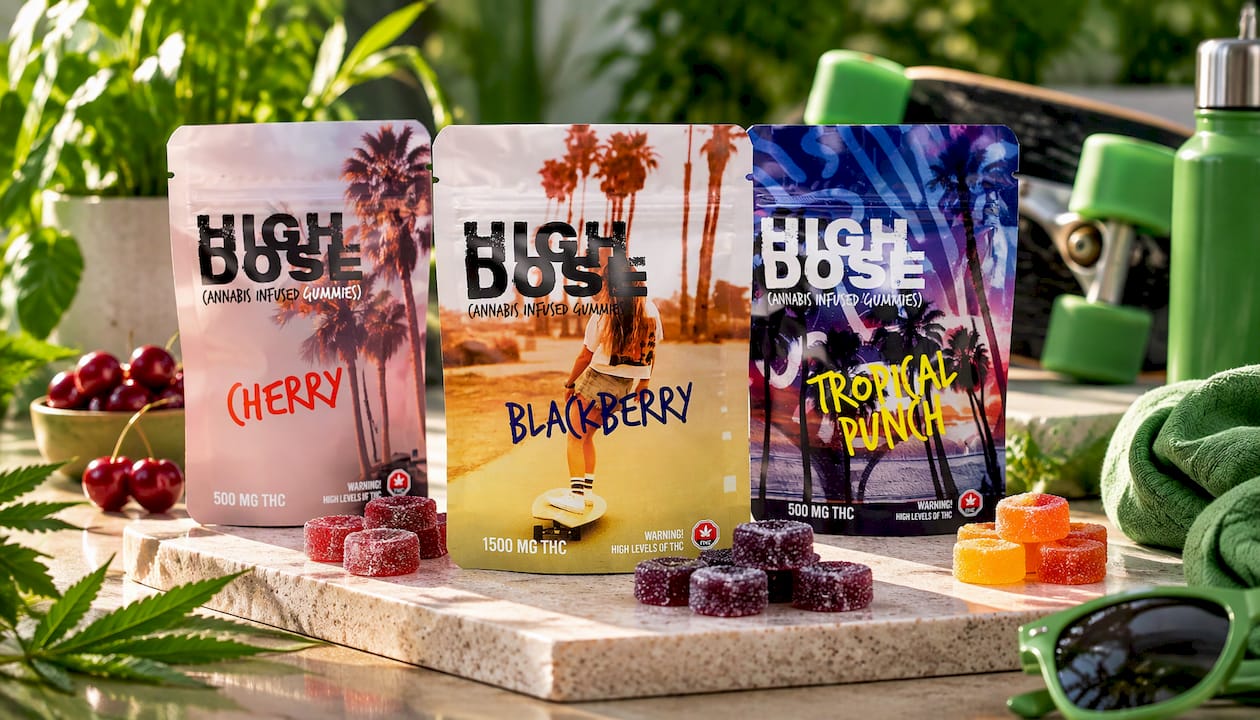
If you already know your tolerance and want a higher-strength gummy, we carry several high dose packs. You can browse High Dose Gummies (1000mg), High Dose Gummies (1500mg) and High Dose THC Gummies (1500mg). Each listing shows the pack total, so check the piece count to work out your per-gummy dose before ordering.
For more options, see our strongest edibles collection or the full edibles category. Orders ship in discreet packaging, same-day delivery is available, and our loyalty program rewards frequent buyers. Start at xpressgrass.com.
What to do if an edible feels too strong
It happens to experienced consumers too, usually after taking more before the first dose has peaked. Most uncomfortable episodes pass, but know the signs that need help.
First steps for an unpleasant but manageable reaction:
-
Stay calm and remind yourself that it is temporary.
-
Sit or lie down somewhere quiet and safe, with a trusted person nearby.
-
Drink water and have a light snack.
-
Do not take more, and do not drive.
When to get help. Health Canada says that if you took too much cannabis, call 1-844-POISON-X (1-844-764-7669), or 1-800-463-5060 in Quebec. Call 9-1-1 for seizures, chest pain, trouble breathing, loss of consciousness, or thoughts of suicide or other abnormal thoughts.
A Health Canada recall alert from March 2023 lists signs of high THC intake: chest pain, rapid heartbeat, vomiting, severe anxiety, panic attack, confusion, slurred speech, unsteadiness and loss of consciousness. If someone shows these, treat it as urgent. Children and pets who get into edibles need immediate medical or veterinary attention.
Who should be extra careful with high dose edibles
Health Canada’s warnings single out people under 25, and the Windsor-Essex County Health Unit notes that harms increase with daily or frequent use and with stronger products. A 2020 review by Matheson and Le Foll adds that over-ingestion is linked to high-THC products and confusion about labelling, which affect new users most. If you are new to edibles, or coming back after a break, treat yourself as a beginner for your first session, whatever dose you used to take.
FAQ
Are high dose edibles legal in Canada?
Regulated edibles in Canada are limited to 10 mg of THC per package, with a 10 mg cap per unit as well. Extracts follow a different classification and can hold up to 1,000 mg per container under Health Canada’s rules. Always read the label to see how a product is classified and what it contains.
How much THC is a lot in an edible?
Public health guidance suggests starting with 2.5 mg or less, so anything above 10 mg is a lot for most people. Doses of 20 to 30 mg or more are meant for consumers with established tolerance. Your weight, metabolism and whether you have eaten all change how strong a dose feels.
How long should I wait before taking more?
Wait at least two hours at the very minimum, and four hours is the safer choice with strong edibles. Effects can take up to 4 hours to peak, and taking more before then is the most common way people overshoot. If in doubt, wait until the next day.
What should I do if my edible is too strong?
Stay somewhere calm and safe with someone you trust, drink water and avoid taking more. If you feel chest pain, have trouble breathing, have a seizure or lose consciousness, call 9-1-1. For other concerns about having taken too much, call 1-844-POISON-X (1-844-764-7669).
How do I work out the dose per gummy?
Divide the total THC on the package by the number of pieces, or read the per-unit THC on the label. A 1,000 mg pack with 40 gummies is 25 mg per gummy. Decide how many pieces you will eat before you open the pack.
Sources
-
Classification of ingestible cannabis products: edible cannabis
-
Cannabis Edibles Can Impair Driving Even When Blood THC Levels Are Below Legal Thresholds, CAMH
-
CCMOH statement on cannabis extracts, edibles and topical products
-
Cannabis edibles incorrectly sold as cannabis extracts, Health Canada recall
-
Cannabis Legalization and Acute Harm From High Potency Cannabis Products