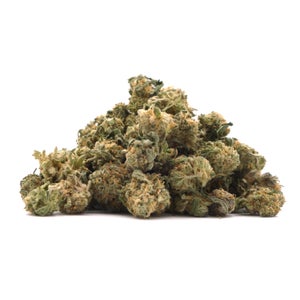


Gummy candy edibles are chewy, candy-style products made with cannabis. In Canada, a legal gummy cannot contain more than 10 mg of THC per package, and that cap also applies to each individual piece. Effects can take up to two hours to arrive and last well into the next day. That makes the label, the starting dose and your patience the three things that matter most. This guide covers what gummy bears and other gummy edibles are, how they compare with chocolates and other formats, how to read a Canadian label, and how to use and store them responsibly.
TL;DR
- Legal edible cannabis in Canada is capped at 10 mg THC per package, and each discrete unit cannot exceed 10 mg either, subject to variability limits.
- Health Canada suggests new consumers look for 2.5 mg of THC or less and take the most care with products at 10 mg or more.
- Onset runs from 30 minutes to 2 hours, so do not take a second gummy early. Provincial health guidance says to wait at least 2 to 4 hours.
- Store gummies away from regular food, locked up and out of reach of children and pets.
- Choose products by THC per piece, format and flavour, not by how candy-like they look.
Table of Contents
- What gummy candy edibles are
- What the Canadian rules mean for your gummies
- Types of weed edibles beyond gummies
- How to read a gummy label and pick a dose
- Timing: why waiting matters
- Using gummies more safely
- Storing gummies around kids and pets
- Our perspective
- Choosing a gummy at an online dispensary
- Ready to order gummies online
- A quick history of why gummies exist
- FAQ
- Sources
What gummy candy edibles are
The Windsor-Essex County Health Unit describes edibles as products made to be eaten that contain cannabis, such as candies, gummies, cookies or brownies. They can also include infused drinks like coffee or tea. A gummy is simply the most familiar version: a soft, chewy confection, often shaped like a bear, worm, ring or cube, with a measured amount of cannabis in each piece.
People search for the same thing under many names: THC gummy bears, edible gummy bears, gummy bear edibles. They all point to one product type. The shape is a branding choice. What changes how a gummy feels is the cannabinoid inside (THC, CBD, CBN or a blend), the dose per piece and how your body handles it.
Gummies are popular for a few practical reasons:
- Pre-portioned. Each piece carries a set dose, so you can take one rather than guess.
- Discreet. There is no smoke or vapour and little smell.
- Easy to split. A soft gummy can be cut in half or quarters if you want a smaller dose.
- Flavour range. Sour, sweet, fruit and tart profiles cover most tastes.
That last point cuts both ways. Because they taste like candy, they need to be treated like medicine-cabinet items at home. More on that below.
What the Canadian rules mean for your gummies
Canada’s legal market is tightly defined, and knowing the rules helps you spot a legitimate product at a glance.
According to Health Canada’s Packaging and Labelling Guide, subject to variability limits, the container and each discrete unit cannot exceed 10 mg THC. The same guide says cannabis products must be in child-resistant containers with a security feature, with plain packaging and limits on logos, colours and branding. Labels carry:
- a health warning message
- the standardized cannabis symbol where applicable
- the brand name and class of cannabis
- THC and CBD information
- licence holder information
The Montreal Heart Institute Prevention Observatory adds that alcohol, nicotine, vitamins or minerals may not be added to edible cannabis, that packaging must not appeal to young people, and that health benefit claims are not allowed.
Why a legal gummy looks plain
If a package is covered in cartoon characters or mimics a famous candy brand, that is a red flag. Health Canada’s safe storage page warns that illegal edibles often have flashy packaging mimicking brand name candies and can contain very high amounts of THC. Legal products are deliberately plain: simple labels, a clear THC figure and a child-resistant container.
Edibles versus extracts
The 10 mg package rule applies to edibles. Health Canada’s recall notice explains that cannabis extracts may contain up to 1,000 mg THC per package, with up to 10 mg per unit. The notice was issued because edible-style products sold as extracts could lead to overconsumption. The practical lesson: always check which product class the label states, and read the per-piece and per-package THC before you eat anything.
Types of weed edibles beyond gummies
Gummies are one format among many. One overview lists nine main categories: gummies, chocolates, baked goods, hard candies and mints, beverages, tinctures, capsules and pills, savory snacks and infused oils. It puts onset anywhere from about 10 minutes for beverages to around 2 hours for baked goods. WebMD similarly lists brownies, candy, chocolate, lozenges, drinks and lollipops alongside gummies.
Here is how the formats most readers compare stack up in everyday use:
| Format | What it is like | Good fit if you want |
|---|---|---|
| Gummies | Chewy, pre-portioned, many flavours | A simple, measured, easy-to-split dose |
| Chocolates | Break-apart squares, richer taste | Smaller sub-doses by the square |
| Baked goods | Brownies, cookies | A snack-style experience, usually the slowest onset |
| Hard candies and mints | Dissolve slowly | Discreet, small units |
| Beverages | Drinks and tea | Faster onset than most solid formats |
| Capsules and tinctures | No candy taste | Precise, flavour-free dosing |
If you are choosing between cannabis gummies and chocolates, the real question is how you like to portion. Gummies give you one clear unit. Chocolates let you take a square or half a square. Neither is faster or safer by nature; the dose and your pace decide that. Our beginners guide to consuming edibles walks through the practical side of each.
THC, CBD and other gummy types
Not every gummy is a THC gummy. Many readers also look for CBD or minor-cannabinoid options. We cover that category in a deeper look at CBD gummies on the market in Canada and in our piece on CBD edibles and what everyone should know. If you are curious about blends, our catalogue includes items such as the Big Bang 1:1 CBN/CBG gummies. Read each product page for its cannabinoid breakdown and dose per piece.
How to read a gummy label and pick a dose
Three numbers decide your experience: THC per piece, number of pieces and the total in the package.
- THC per piece. A ten-piece pack at 1 mg each is a very different product from a pack with one 10 mg piece. Divide the total by the count if the per-piece figure is not obvious.
- Your starting point. Health Canada’s guidance for new consumers is to look for a product with 2.5 mg of THC or less. The BC Government’s fact sheet and the Windsor-Essex County Health Unit give the same 2.5 mg figure for a starting portion.
- Where to be most careful. Health Canada says to exercise the most caution with products containing 10 mg of THC or more.
A worked example: if a gummy is labelled 10 mg THC and you want a 2.5 mg portion, you would need a quarter. Cutting a soft gummy into four is possible, but the cannabis may not be spread perfectly evenly through the piece. If precise portions matter to you, look for products labelled with a lower per-piece dose rather than cutting a high-dose gummy.
Timing: why waiting matters
This is where most bad experiences begin. Gummies do not hit like inhaled cannabis.
Health Canada states that ingested cannabis can take 30 minutes to 2 hours to begin producing effects, up to 4 hours to feel its full effects, and effects can last up to 12 hours, with some residual effects lasting up to 24 hours. The RNCA’s Cannabis Awareness document explains that the body converts ingested THC into a stronger form called 11-hydroxy-THC, which is why edible effects can be stronger and more prolonged.
The BC Government adds that effects vary with weight, metabolism, sex and whether you have eaten. That is why two friends can eat the same gummy and have very different evenings.
How long to wait before another piece? The guidance differs slightly by body:
- BC Government: wait at least 2 hours before a second dose.
- Windsor-Essex County Health Unit: wait at least 4 hours before having more.
The longer window is the more conservative choice. For a deeper breakdown, see our guide on how long edibles last.
Using gummies more safely
The BC fact sheet warns that overconsumption can lead to extreme sedation or inability to move, anxiety, paranoia, hallucinations, delusions, rapid heartbeat or respiratory depression. If you or someone you are with has severe symptoms, call your local emergency number or your provincial poison centre.
A sensible routine:
- Start low. Aim for 2.5 mg THC or less on your first try.
- Go slow. Wait out the full onset window before deciding you need more.
- Keep it simple. Health Canada advises avoiding cannabis together with nicotine, alcohol, other drugs or health products.
- Plan your day. The Windsor-Essex County Health Unit advises not driving or operating heavy equipment after use.
- Do not make it daily. The same health unit recommends not using cannabis every day.
- Mind your age. It notes that cannabis may harm brain development, which continues until around age 25, and advises delaying use until later in life.
Storing gummies around kids and pets
Gummies are the format most easily mistaken for ordinary candy, so storage is not optional. Health Canada advises storing all cannabis, especially edibles, securely and out of reach of children, youth and pets. Its safe storage page adds that you should keep them apart from regular food and drinks, use a strong childproof lock or latch, and consider a lockbox or safe.
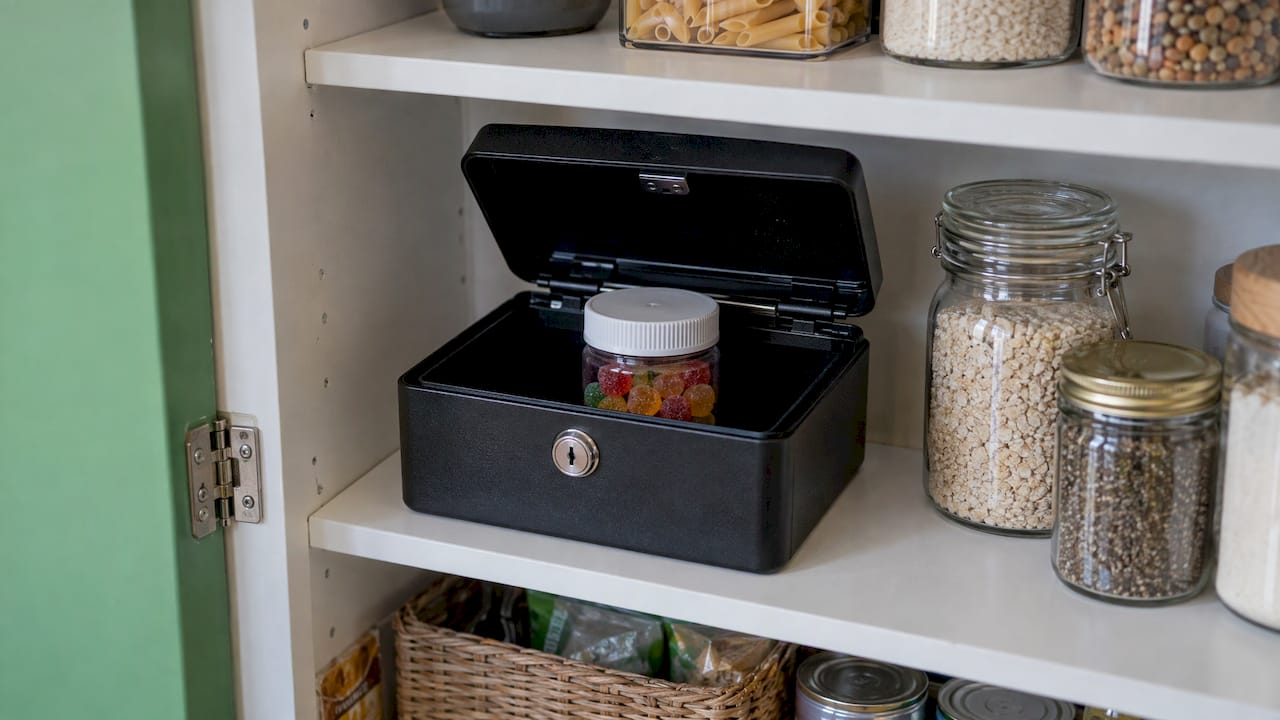
The stakes are real. The CCSA reports that between 2015 and 2021 Canada recorded 581 hospitalizations from cannabis poisoning in children. The same toolkit advises treating edibles like any other dangerous household item, keeping them in child-resistant packaging or a locked container, and avoiding consuming edibles in front of children. The RNCA notes that children may become uncoordinated, drowsy, unable to wake up or have trouble breathing. If a child may have eaten a gummy, call your poison centre or emergency services right away.
Practical habits that help:
- Keep gummies in their original child-resistant package inside a locked box.
- Never move them to a candy jar or an unmarked bag.
- Tell guests and family members where they are and that they are not candy.
- Do not leave a pack in a purse, jacket or glove box.
Our perspective
We hear the same thing from first-time buyers again and again: they want something simple, discreet and predictable. Gummies deliver that better than almost any other format, because the dose is built into the piece. That is why we treat them as a core part of what we offer rather than an afterthought.
Our view is that a good edible experience starts before the purchase. Read the THC per piece, pick a format you will actually enjoy, and give yourself a calm evening with nothing to do. Our shop is designed to make that easy: a wide range of flower, edibles, extracts and vapes in one place, with discreet packaging focused on privacy and same-day delivery across Canada.
We also built a loyalty program for people who come back, because most regular customers find their favourite gummy format and flavour and want to keep it in stock at a fair price. If you are exploring, start with a smaller-dose product and build from there. If you already know what you like, you can reorder in a few clicks.
the author
Choosing a gummy at an online dispensary
When you browse, these questions narrow things quickly:
- What cannabinoid do I want? THC for a standard cannabis experience, CBD or a CBN/CBG blend if you prefer a different profile. Our guide to Delta 8 THC in Canada covers another option people ask about.
- What is the dose per piece? Pick the lowest dose that suits you and work up gradually.
- What flavour and texture do I like? Sour, sweet, fruit and worm or bear shapes are matters of taste. A product such as our medicated sour gummy worms is one example of a sour-style option.
- Do I prefer chewing or something else? If gummies are not your thing, chocolates, drinks and capsules are alternatives, and our new product launches post shows what is arriving.
- Is the packaging plain and the label complete? Look for the standardized cannabis symbol, the health warning and the THC information described above.
One more point: avoid unlabelled products or anything promising health benefits. As noted, health benefit claims are not allowed on legal edible cannabis in Canada.
Ready to order gummies online
We stock edibles alongside flower, extracts, vapes, CBD products and accessories, with same-day delivery across Canada and discreet packaging built around your privacy. Frequent buyers can also benefit from our loyalty program.
Browse the full range in our shop or start from the XpressGrass homepage to see delivery and loyalty details.
A quick history of why gummies exist
Edible cannabis only became a legal retail category in Canada after the second wave of regulations. The Cannabis Act took effect in 2018, but edibles were not part of the first phase. The rules that now govern gummies, including the 10 mg cap and plain, child-resistant packaging, were designed with a clear public-health aim. CAMH’s submission to the legislative review notes that the Act limits edible cannabis to 10 mg THC per package and that Canada has seen a marked increase in unintentional poisonings in children since legalization. That context explains why legal gummies look plain and why storage advice is so insistent. It also explains why a legal product with a clear label is the better starting point than anything from outside the regulated market.
FAQ
How strong is a THC gummy bear in Canada?
A legal gummy cannot exceed 10 mg THC per piece, and the whole package is capped at 10 mg as well, subject to variability limits. Many products contain less per piece. Health Canada suggests new consumers start with 2.5 mg or less.
How long do gummy edibles take to work?
Health Canada says ingested cannabis can take 30 minutes to 2 hours to start working, with full effects up to 4 hours later. Effects can last up to 12 hours, and some residual effects can last up to 24 hours. Wait before taking more.
Are cannabis gummies or chocolates better?
Neither is better by default. Gummies come in single pre-portioned pieces, while chocolates can be broken into smaller squares. Both act on the same slow onset timeline, so the dose on the label and your patience matter more than the format.
How should I store gummies at home?
Keep them in their original child-resistant package, apart from regular food and drinks, in a locked box or safe. Health Canada advises storing edibles out of reach of children, youth and pets, since they can be mistaken for ordinary candy.
Can I mix gummies with alcohol?
Health Canada advises avoiding cannabis together with nicotine, alcohol, other drugs or health products. The Windsor-Essex County Health Unit gives the same advice. Do not drive or operate heavy equipment after use.
Sources
- Packaging and labelling guide for cannabis products (Health Canada)
- What you need to know if you choose to consume cannabis (Health Canada)
- Safe storage of cannabis (Health Canada)
- Cannabis edibles incorrectly sold as cannabis extracts (Health Canada recall alert)
- Cannabis Edibles (Windsor-Essex County Health Unit)
- Cannabis Awareness (RNCA)
- Pediatric Cannabis Poisoning: Stakeholder Toolkit (CCSA)
- Edible cannabis: an effect of longer duration (Montreal Heart Institute Prevention Observatory)
- Legislative Review of the Cannabis Act (CAMH submission)
- 9 Types of Edibles Explained
- THC Edibles and Gummies: Types, Effects, and Safety (WebMD)